
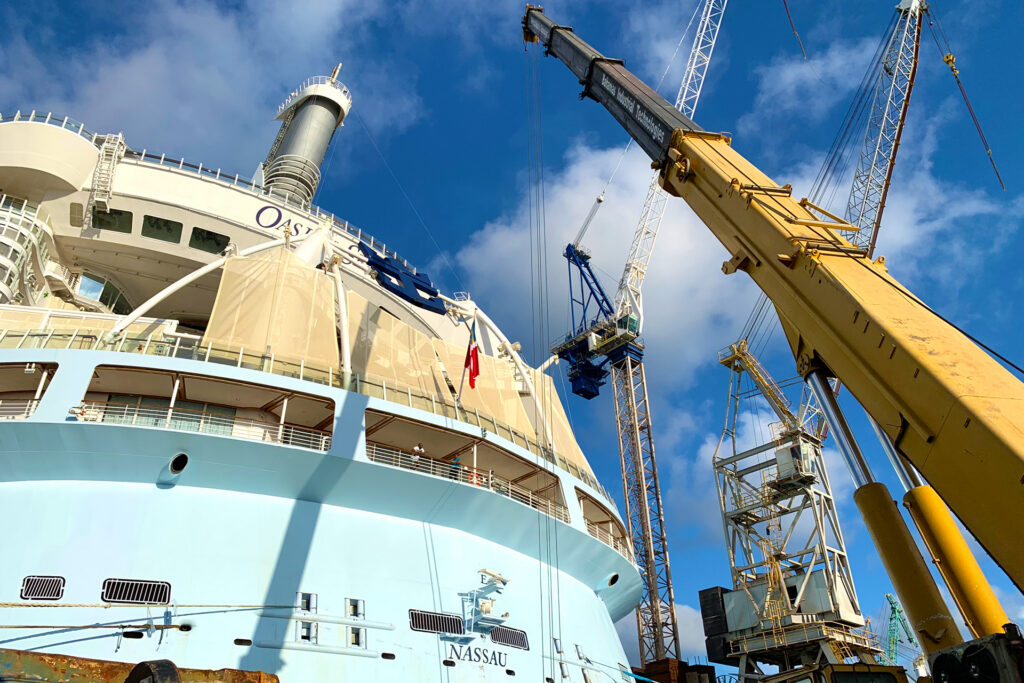
Why Cruise Ships Can't Afford Downtime (And Who Helps Keep Them Moving)
Every year, millions of passengers travel to The Bahamas aboard some of the world's largest and most sophisticated cruise ships. For travelers, the experience is seamless: the ship arrives, guests disembark, supplies are loaded, and the vessel departs on schedule.
What most people don't see is the complex network of infrastructure, equipment, and industrial expertise working behind the scenes to make that happen.
In the cruise industry, time is one of the most valuable resources. Delays can affect passenger schedules, port operations, logistics providers, and cruise line profitability. That's why downtime—whether caused by equipment failure, infrastructure issues, or maintenance challenges—is something cruise operators simply cannot afford.
The High Cost of Downtime
Modern cruise ships operate on carefully coordinated schedules that are often planned months or even years in advance.
A delay at one port can create a ripple effect throughout an entire itinerary. Passengers may miss excursions, logistics schedules can be disrupted, and operational costs can quickly escalate.
For ports and marine facilities, reliability is essential. Every crane, loading system, hydraulic component, and structural asset must perform as expected when needed.
When critical equipment is unavailable, even for a short period, the consequences can be significant.
What Happens Behind the Scenes
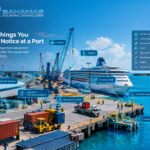
While passengers enjoy beaches, resorts, and excursions, a tremendous amount of work takes place behind the scenes at cruise ports.
Industrial teams are responsible for maintaining and supporting the infrastructure that keeps operations moving, including:
- Port equipment and loading systems
- Structural steel components and marine infrastructure
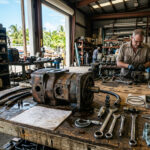
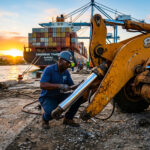
- Hydraulic systems and cylinders
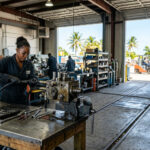
- Mechanical equipment and support machinery
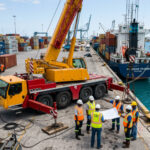
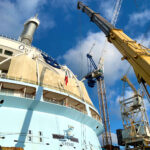
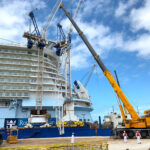
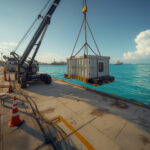
- Heavy lifting and specialized rigging operations
Many of these assets operate in one of the harshest environments possible: a marine setting exposed to salt air, humidity, wind, and constant use.
Keeping them operational requires expertise, planning, and proactive maintenance.
The Challenge of Operating in The Bahamas
The Bahamian marine environment presents unique challenges.
Salt-laden air accelerates corrosion. Heavy equipment is exposed to demanding operating conditions. Replacement parts may require shipping and logistics coordination that can extend downtime if repairs are not handled efficiently.
This makes preventative maintenance and rapid response capabilities particularly important.
When equipment fails unexpectedly, having local industrial expertise available can make the difference between a minor disruption and a major operational issue.
Supporting the Infrastructure Behind the Industry
For more than two decades, Bahamas Industrial Technologies has provided industrial services that support marine, port, and heavy industrial operations throughout The Bahamas.
From mobile crane rentals and precision rigging services to hydraulic cylinder restoration, fabrication, machining, and equipment repairs, BIT helps maintain the systems and infrastructure that keep critical operations running.
Our work often happens behind the scenes, but its impact is visible every time a vessel arrives safely, operations proceed efficiently, and projects remain on schedule.
Keeping The Bahamas Moving
The cruise industry plays a vital role in the Bahamian economy. Behind every successful port call is a network of professionals working to ensure equipment performs, infrastructure remains reliable, and operations continue without interruption.
While visitors may remember the beaches, the resorts, and the experiences they enjoyed ashore, there is another side to the story—one built on engineering, maintenance, fabrication, and industrial expertise.
Because when cruise ships can't afford downtime, neither can the infrastructure that supports them.
And that's where experience matters.